Primary School
Welcome to the Primary School
Vienna International School (VIS) Primary School is more than just a place of learning; it is a vibrant "home away from home" for a community representing over 100 nationalities. We take great pride in our diversity, viewing it as a powerful asset that enriches our classrooms and fosters global citizenship in every child.
At VIS, we believe that strong relationships are at the heart of our school. Our success is built upon a collaborative culture where teachers, students, and parents work in a mutually respectful partnership to support each student’s unique journey. By working together to develop a shared understanding of our goals, we ensure that every child feels safe, respected, and valued.
At the heart of all that we do in the Primary School is the International Baccalaureate’s Primary Years Programme (PYP). This inquiry-led, transdisciplinary framework challenges students to take responsibility for their learning while developing the academic, social, physical, and emotional skills necessary to thrive in a changing world.
Recognizing that every child has a unique linguistic and learning profile, we offer a nurturing environment supported by dedicated specialists:
- Multilingualism: A majority of our students learn English as an additional language. Our English Language Acquisition (ELA) and Mother Tongue programmes support academic success while celebrating students' home languages. We currently support over 40 different mother tongues, and all students begin learning German from age five.
- Student Support: Individual learning needs are met through our Learning Support department and our Primary School Counsellors, who provide the social-emotional care that serves as the foundation for all learning.
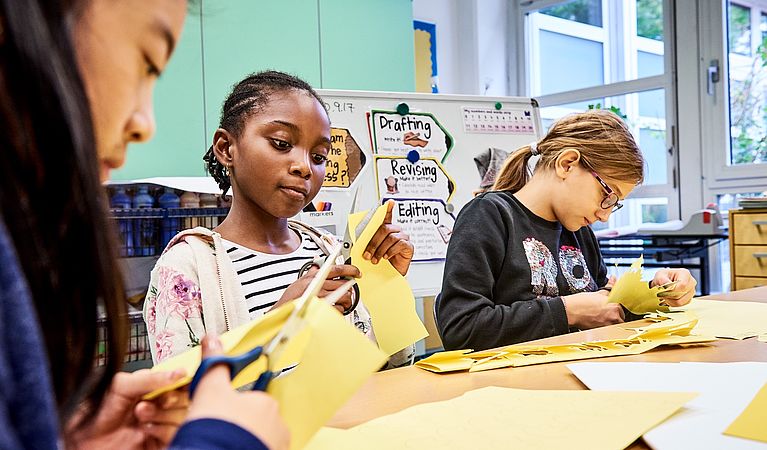
Our students are guided by specialist teachers in music, art, drama, physical education (PE), and library. Our facilities provide opportunities for inquiry, including hands-on lessons in our outdoor learning gardens.
The Primary School is a dynamic place where learning extends beyond classroom walls. Through our transdisciplinary programme, students utilize digital tools to solve problems and communicate. Additionally, a wide range of well-structured excursions and a robust After School Activities programme provide further opportunities for students to explore sports, the arts, and science.
At VIS, we are committed to developing students who are inquiring, inspired, and involved. I look forward to meeting you and collaborating with your family to ensure your child achieves their full potential within our caring community.
Kind regards,
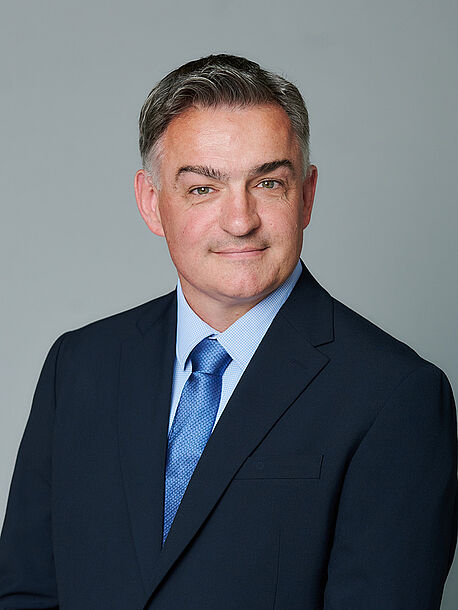
Kyle Hawkins - Primary School Principal
Primary School Programme by Subject
At VIS students speak, listen, view, present, read and write as they inquire and construct meaning. English Language (Language A) is taught in relevant, authentic and meaningful contexts. A student’s prior knowledge and understanding serve as the basis for future teaching and learning. Through the integration of a variety of instructional strategies, our students are empowered to learn language, learn about language and learn through language. Younger students learn in a language-rich environment in which a strong focus on oral language is maintained. Through play, a variety of learning experiences and conversation, children are invited to talk, listen, read and write for a variety of authentic purposes.
English Language Acquisition (ELA) and English B "Language is the medium in which teaching and learning take place in schools; the medium through which we transform and develop our thinking about concepts; and in this way language and content are inextricably linked" (Halliday, 1993)
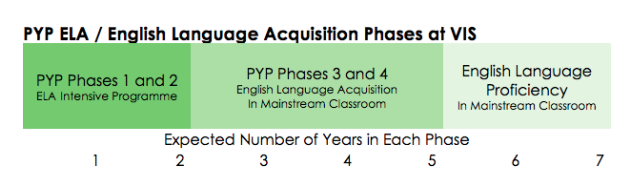
The Language Acquisition programme has been designed to meet the needs of students who have English as a second or additional language. Our goal is to develop English language skills, which allow children to be successful in their academic work as well as in everyday communication. We have adopted the IB language continua in which is organised in phases.
The Primary School offers a discrete programme for the IB PYP Language Scope & Sequence Phase 1 and 2. Students in the IB PYP Phases 3 and 4 are supported in the classroom.
We recognize that language is developmental and is fundamental to all learning. All students from ELC to Grade 5 participate in our Primary School German Language Programme, which is based on the IB Language Framework.
Lessons are taught by German language teachers in grade level groups.
At the Primary School, there are five full-time and several part-time German teachers who incorporate listening, speaking, reading, and writing into both stand-alone language units and units integrated with classroom topics. The program focuses on oral language development - particularly listening and speaking - through role-play, games, books, songs, interactive listening and speaking activities, digital tools, and online games. It also includes reading, creative writing, the writing process, grammar, and spelling of high-frequency words, tailored to students’ age and German proficiency levels. Standardized assessments and state-approved materials are used across different groups where appropriate.
For more information about the German programme in Primary School, please click here.
VIS was a pioneer amongst international schools in recognizing the importance of additive bilingualism. A large number of research studies show very clearly that bilingualism can increase children’s language abilities and help their progress in school.
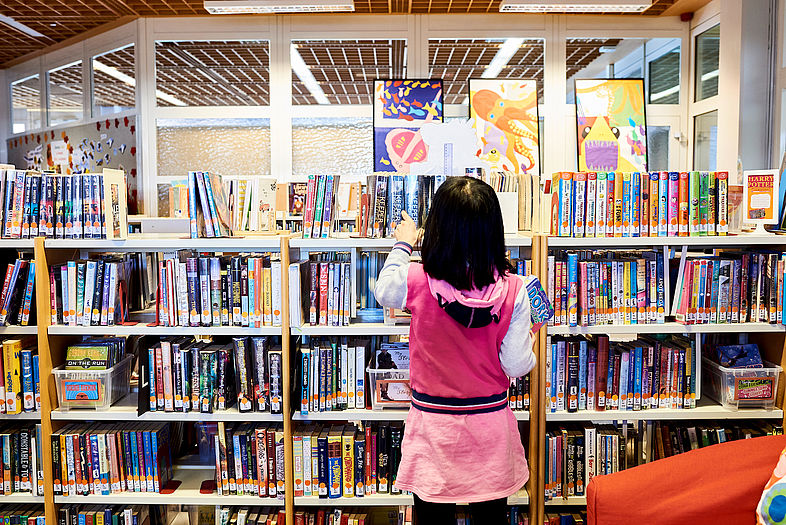
Both the Primary and Secondary schools at VIS are truly international in that the majority of our students speak a language other than English as their first language. Mother Tongue lessons in a wide range of languages are facilitated, as well as an increasing book collection in the school libraries. The Primary School offers over 3000 books in 60 different languages.
In today's increasingly technology-based society, knowledge and understanding of mathematics is becoming ever more important in many aspects of everyday life. The goal of the Primary School Mathematics Curriculum is to structure mathematics education so that our students experience the enjoyment and fascination of mathematics and see the value and importance of it as they gain confidence and skills.
At each grade level, the study of mathematics equips students with understanding, knowledge, skills and practices in the main strands of the curriculum: Number, Measurement, Shape and Space, Data Handling and Pattern and Function. Students progressively develop their abilities to think critically, solve problems of various kinds and communicate their thinking effectively.
Science can be used to provide explanations and models of behaviour for phenomena and objects around us. It can also be used to investigate the interrelationships between the natural, physical and material worlds. The study of science as taught in the Curriculum and supported by our resident Science Expert and Outdoor Learning Gardens can be used as a vehicle for teaching critical-thinking skills and as a way of exploring the world. The development of ways of investigating and using evidence enables students to interact with the world around them.
People all over the world have more similarities than differences because our basic human needs are the same. It is how we meet these needs and interact with our environment that makes us different. Through learning about Social Studies integrated in the Curriculum, students develop from having an understanding of their personal and cultural identities to gaining a greater awareness and understanding of different peoples across place and time. They also develop an understanding of people’s relationship with and responsibility toward the environment.
PSE is concerned with the ongoing development and growth of the individual in respect to feelings, beliefs and behaviours, and how they interrelate. It also considers the interaction of the individual within various communities. Well-being is intrinsically linked to all aspects of a student’s experience at school and beyond. It encompasses physical, emotional, cognitive, spiritual and social health and development, and contributes to an understanding of self, to developing and maintaining relationships with others, and to participation in an active, healthy lifestyle. PSE is integral to teaching and learning in the PYP and is embodied in the IB learner profile that permeates the programme and represents the qualities of internationally-minded students and effective lifelong learners. The Vienna International School community strives to provide a stable encouraging environment as we believe a gradual mastery of one's own feelings allow us to take action and initiate support of others.
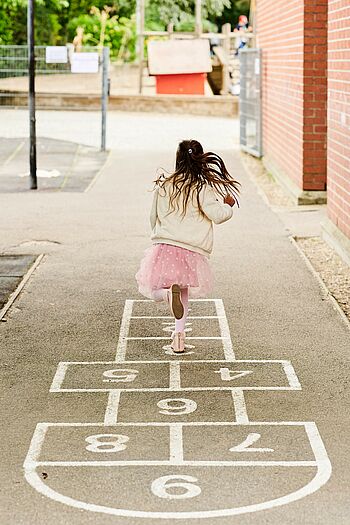
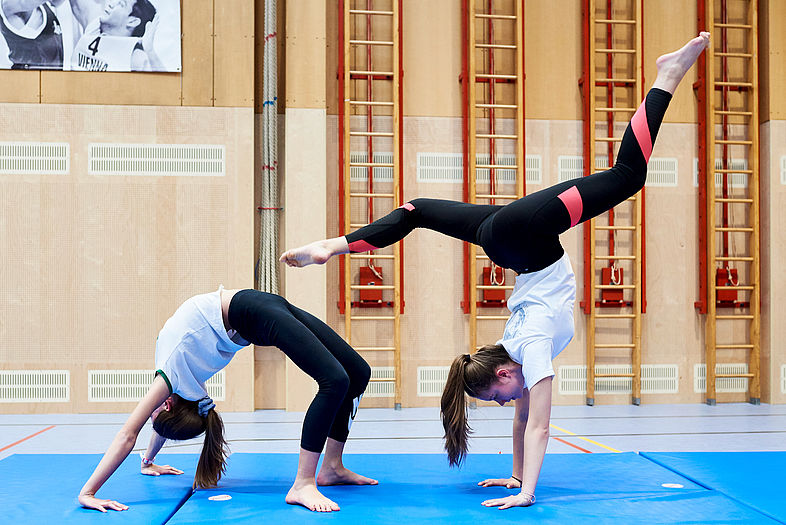
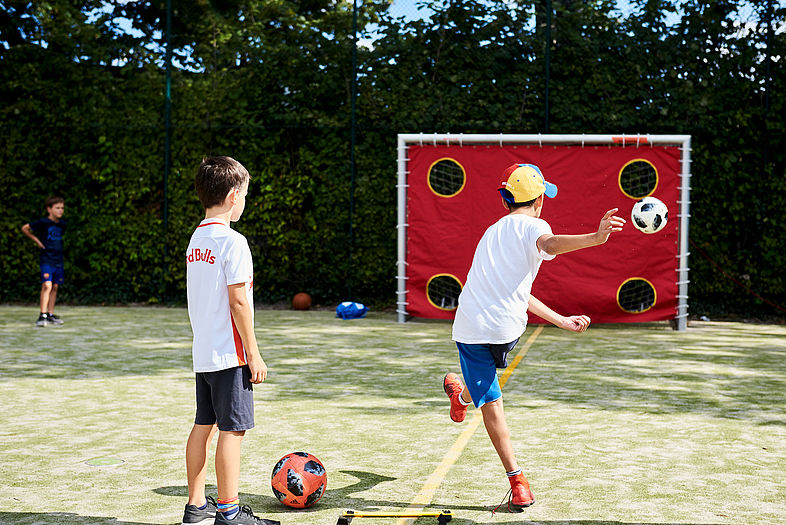
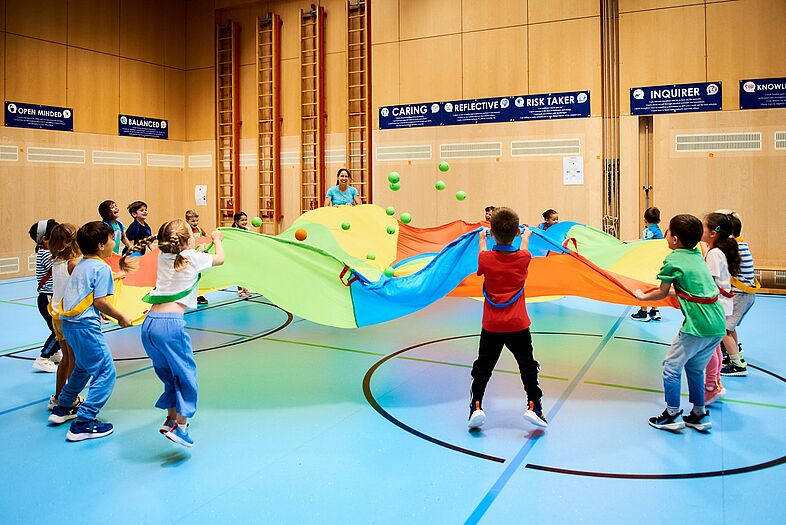
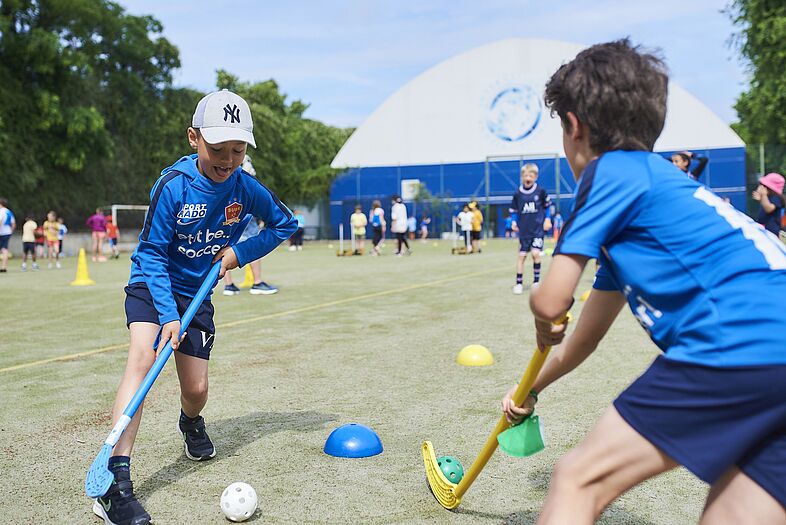
PE has an important role to play in various aspects of human development: physical, social, personal and emotional. In the Primary School, these aspects are developed by giving students the opportunity to learn about and through movement. Students experience a wide variety of physical activities to help develop their movement skills. Through these activities, students can increase their confidence and cooperative skills. They develop an understanding of the role of physical activities for communities and individuals.
Music
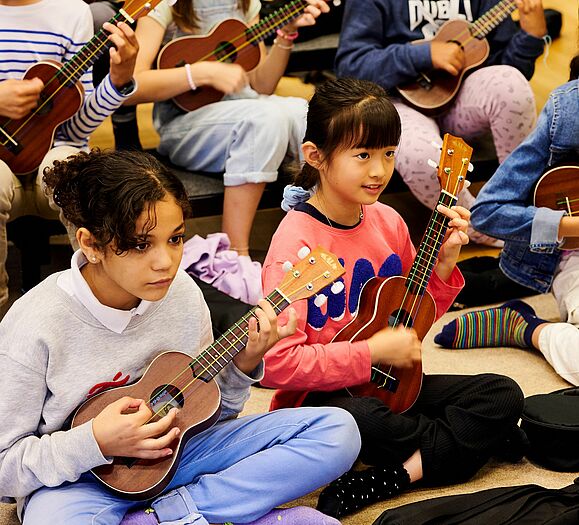
Music contributes to the development of the whole child. Learning about music can lead to a life-long desire to enjoy and learn about music. Music touches the mind, body, and spirit and is a powerful force throughout our lives. It can help us develop an appreciation and understanding of ourselves and of cultures of the world. Through listening, performing, and creating, opportunities are created for students to express themselves and to gain a deeper understanding of music. Furthermore, discussion, analysis and reflection help students become educated consumers of music. The study of music is the study of a basic form of communication. Students will join together in musical activities using their voices, bodies and instruments. Each student in the VIS Primary School is supported in reaching their musical potential by developing musical reading abilities and performance skills.
Drama
Drama contributes to the development of the whole child. Learning about and through drama can lead to a life-long desire to enjoy hands-onexperiences. Drama touches the mind, body, and spirit and is a powerful force throughout our lives. It can help us develop an appreciation and understanding of ourselves, others and the many cultures of the world. Drama is a process of responding to observations, ideas, feelings and other experiences. Skillful, thoughtful and imaginative experiences liberate and deepen the students’ power of expression and challenge them to reconcile the powers of emotion and intuition with intellectual ability. VIS has expanded the Drama Programme in the Primary School since the 2019/20 school year; including a full-time drama teacher for Grades 1 to 5, and a dedicated drama space.
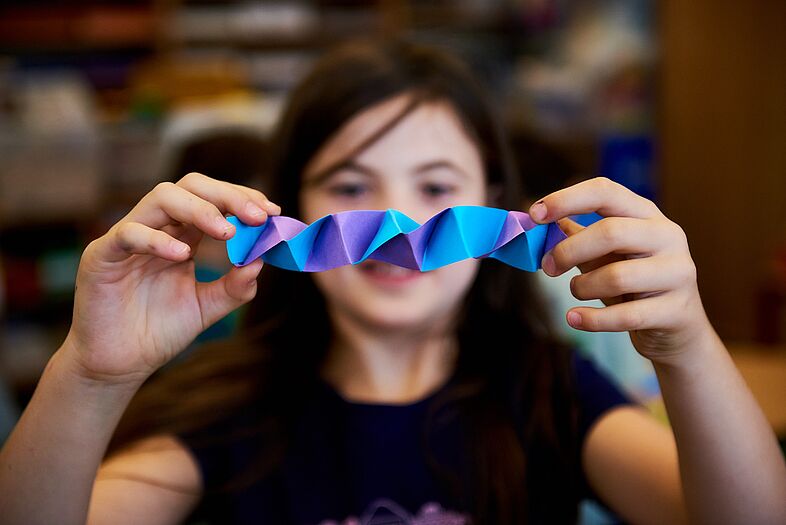
The Vienna International School prides itself on a very strong and successful Visual Arts programme. We encourage and support students to be confident and able to develop independent art projects from concept to product in the area that they choose, mastering basic art techniques and skills, solving problems and being able to reflect on their own journey.
In Visual Arts in the Primary School, the student is the Artist. Our pedagogical approach is focused on supporting divergent thinking and teaching for creativity. We provide authentic art-making opportunities for students and we encourage them to become more responsible for their own creative process through paired guided inquiry, solving problems, interpretation of a theme and choosing and manipulating materials with purpose.
Primary School Programme by Grade
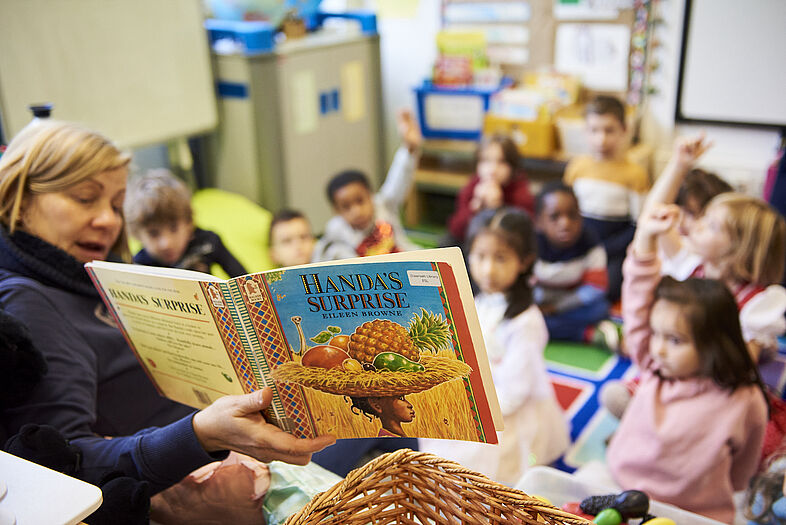
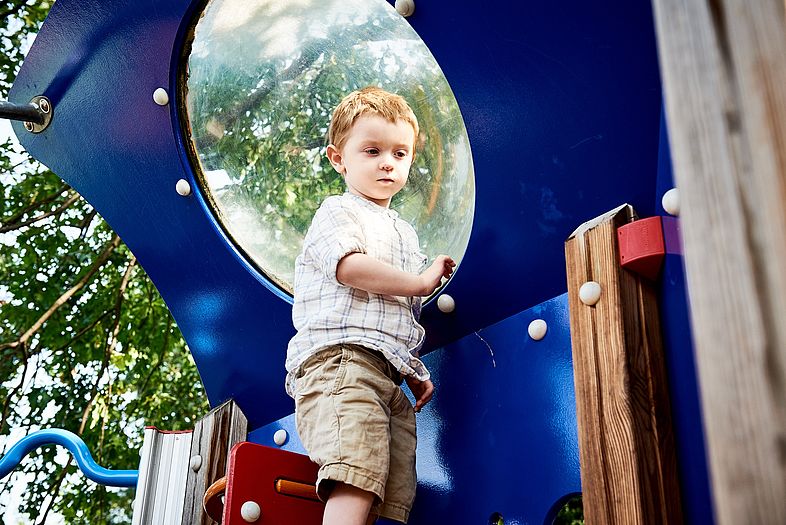
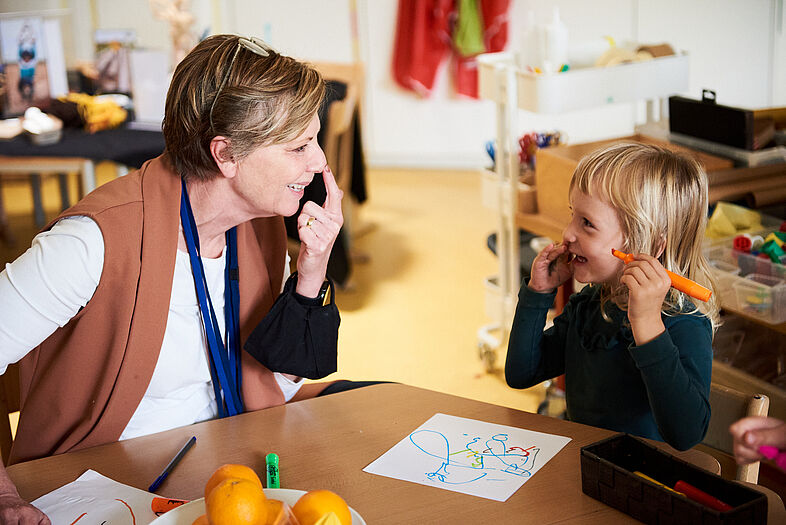
At VIS, we pride ourselves on having a strong Early Learning Years programme, which consists of our Early Learning Centre (ages 3-5) and Grade Primary (ages 5-6), with six classes led by class teachers and Educational Support Staff (ESS). We emphasise learning through play, and each school day and week is planned to provide the children with stimulating activities, outside playtime, and lessons with our specialist teachers in Music, PE, German, Library and Connected Learning, as well as our resident Science Expert and Learning Support team members.
We recognise that children are naturally curious and use experimentation and exploration to make sense of the world around them. Our programme is inspired by the Reggio Emilio approach, which is student-centred and constructivist and utilises self-directed, experiential learning in a relationship-driven environment. We emphasise the growth of children's inquiry, creativity, curiosity and imagination, while the development of basic skills is carefully nurtured.
Our hands-on and active learning, as well as the support from our English Language Acquisition team members, makes it easy for children with differing levels of English to access the curriculum. Through the organisation of the classroom and careful planning, our staff ensure that all students have the opportunity to become confident, skilled and independent learners.
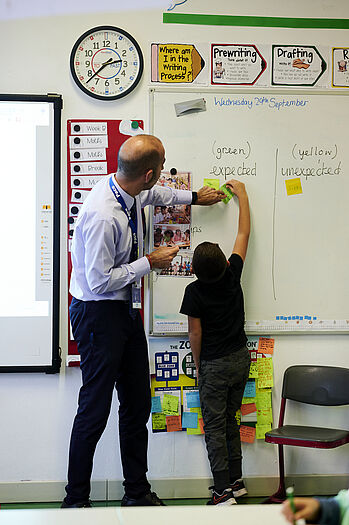
Our programme for Learning in Grades 1-5 in the Primary School is relevant, rigorous and engaging. We have four classes in each grade with Educational Support Staff (ESS) in Grades 1 and 2 and specialist teachers in German, Music, PE, Library, Connected Learning, Visual Art and Drama. Our resident Science Expert supports students in class and in our Outdoor Learning Gardens as do our Learning Support and English Language Acquisition team members.
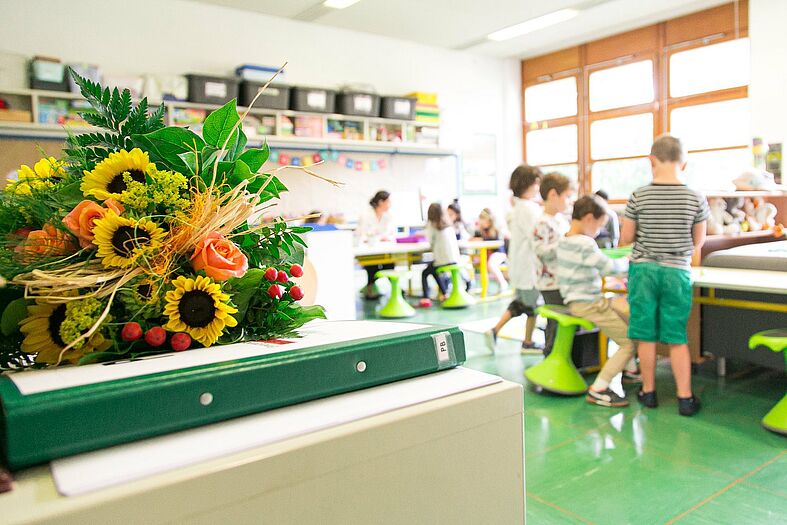
Our well-documented curricula and well-appointed teaching spaces support the effective implementation of the International Baccalaureate Primary Years Programme (IBPYP). Through its inquiry-led, transdisciplinary framework, the PYP challenges students to think for themselves and take responsibility for their learning as they explore local and global issues and opportunities in real-life contexts. Through the study of six transdisciplinary themes of global significance each year, students deepen their learning by developing their conceptual understandings and strengthening their knowledge and skills across and beyond subject areas. PYP students learn how to take control of their learning, and teachers collaborate to deepen student- learning and increase their confidence and self-motivation. The whole school community, including parents, are viewed as partners in learning, all actively contributing to a holistic and valuable educational experience.